
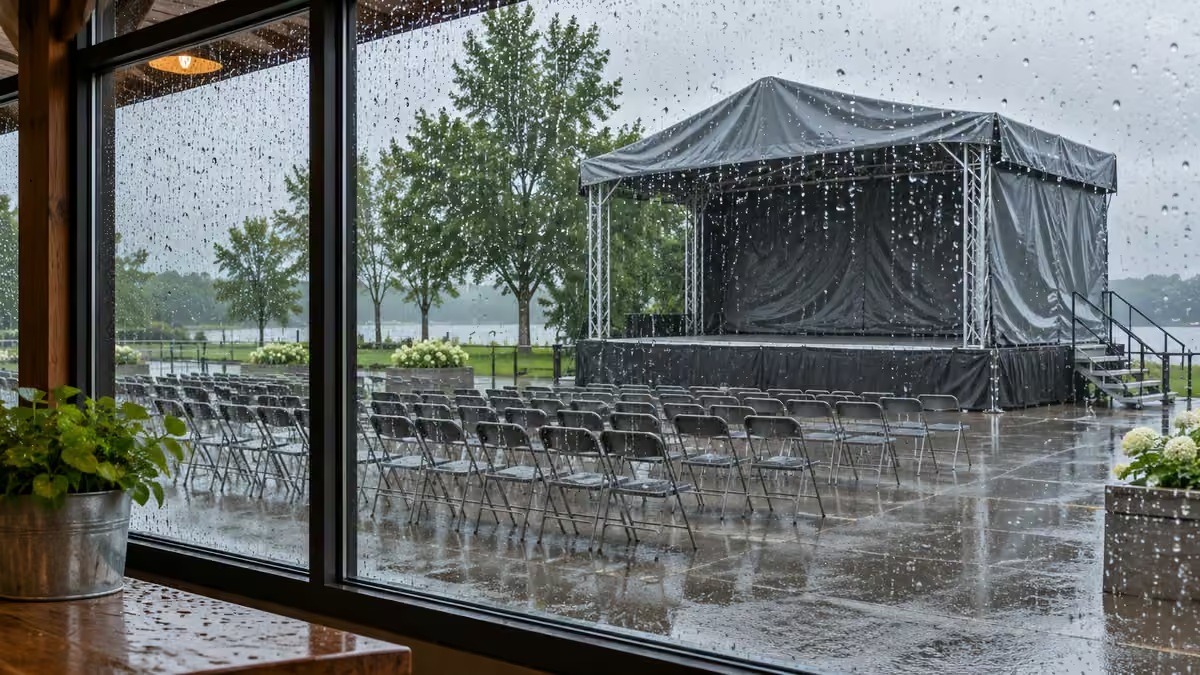
Organizers can commit money well before the event opens. Deposits, production costs and supplier contracts create financial interests even when no guests have arrived.
Cancellation, postponement and interruption
These describe different changes to an event. Cancellation means it does not proceed as planned. Postponement moves it to another time. Interruption concerns a disruption after it has begun.
The policy determines which changes it addresses and how the resulting loss is measured. A financial interest based on committed expenses can differ from one based on anticipated income.
The cause matters as much as the outcome
Not every reason to cancel is insured. The wording identifies covered causes, exclusions and conditions.
Weather, a performer, the venue and suppliers can each be essential to the event without every related problem being covered. Known circumstances and timing can also affect what can be insured. A forecast concern or commercial decision does not establish an insured event simply because the financial consequences are significant.
Contracts affect the amount at stake
Refund provisions and supplier agreements help determine who bears a loss. A refundable deposit has a different financial effect from an amount the organizer remains contractually obliged to pay.
For that reason, the event budget and contractual commitments should be understood alongside the insured interests, limits and loss calculation. Equipment damage, liquor responsibilities and event liability remain separate insurance subjects.
Your next step
Bring your application into view.
Complete the relevant New World application, save a draft and add supporting documents before sending it for review.
Events
Special events
Single or annual events, including venue, activities and cancellation interests.
Save a draft · Add documents · Review before sending
Start application: Special events (opens in a new tab)